Water Heater Leaking From the Bottom? Tank or Valve, and What's Next

September 29, 2026

Out of Sight, Out of Mind

Yellow or brown staining on a ceiling or wall is almost always a moisture signature. It may appear as a ring, a streak running from a corner, or a diffuse blotch near a light fixture. These marks indicate that water has saturated the material above and is wicking downward. The surface may feel dry by the time it stains, because the initial source of moisture may have dried partially, but the organic compounds that feed mold growth remain.


Pay particular attention to staining near plumbing walls, which are walls that contain water supply or drain lines, and to the ceilings of lower floors beneath bathrooms or kitchens.

Here is what to do the moment you see it

Quick Answer: A puddle at the base of your water heater usually comes from one of three places: the drain valve near the bottom, the temperature and pressure (T&P) relief valve on the side or top, or the tank itself. A loose or worn drain valve and a T&P valve responding to excess pressure are both repairable in place. Water coming from underneath the tank, especially if it's rust-colored, almost always means the steel tank has corroded through from the inside, and a leaking tank cannot be patched or sealed — it has to be replaced. The fastest way to tell them apart is to dry the area completely, watch where the water reappears first, and check whether the moisture is warm (active leak) or just condensation on a cold surface. Age matters too: most tank water heaters are built to last roughly 8 to 12 years, and a unit already past that mark leaking from the base is very likely at the end of its service life rather than a candidate for repair.


You walk into the garage or the water heater closet and your shoe lands in a puddle you didn't leave there. Maybe it's just a dark ring around the base, or maybe there's an inch of standing water working its way toward the drywall. In a lot of homes across Inglewood, Hawthorne, and the rest of the South Bay, the water heater sits in a tight garage corner, a closet off the kitchen, or a platform in a slab-foundation home with barely enough room to get a flashlight behind the tank. That makes a bottom leak easy to miss for days, and by the time you notice it, water has usually already reached the drywall, the garage door track, or the subfloor.


Before you reach for a wrench or start Googling repair videos, it helps to know what's actually happening underneath that tank. Not every leak means a new water heater. Some of the most common culprits are cheap parts a licensed plumber can swap out in an afternoon. Others mean the tank failed internally, and no amount of tightening or resealing stops that for good. What follows walks through how to tell the difference, what each source of a bottom leak actually looks like, and where the line sits between "fix it" and "replace it."

Where the Water Is Actually Coming From

A leak that shows up "at the bottom" of the water heater can originate from three distinct points, and they don't get fixed the same way.


The drain valve. Every tank-style water heater has a plastic or brass drain valve near the base, used to flush sediment out of the tank during maintenance. Over years of use, the valve's internal washer wears down, the threads loosen from thermal expansion and contraction, or the valve simply doesn't seat fully closed anymore. When that happens, water seeps or drips steadily from that one specific point. A worn or loose drain valve is one of the more common and least expensive sources of what looks like a "tank leak," and in most cases it's a simple valve replacement rather than a sign the tank is failing.


The T&P relief valve. This is the safety valve mounted on the side or top of the tank, with a discharge tube that usually runs down toward the floor. Its job is to release water automatically if the temperature inside the tank climbs above roughly 210°F or the pressure exceeds about 150 psi, the standard rating stamped on the valve itself. Because the discharge tube routes downward, water from a T&P valve issue often shows up as a puddle near the base of the heater even though the valve itself sits much higher up — which is exactly why this gets mistaken for a tank leak so often. A T&P valve that only weeps or dribbles occasionally usually means it's doing exactly what it's designed to do in response to pressure buildup in the system. One that discharges a large volume of hot water intermittently points to a different problem: a malfunctioning thermostat overheating the tank.


The tank itself. This is the leak nobody wants. Water heater tanks are steel with a thin glass, or "enamel," lining baked onto the interior — not a sealed thermos, whatever it looks like from the outside. Once that lining cracks or wears thin, usually from years of mineral exposure and the constant expansion and contraction of heating cycles, the bare steel underneath starts to corrode. Corrosion eventually eats through the tank wall, and water begins seeping from the base or a side seam.


There is no repair for that. Steel tanks are welded assemblies, and once the seams or the wall itself are compromised, replacement is the only real option.

Diagnosing Which One You're Dealing With

Dry it and watch. The single most reliable diagnostic step is also the simplest one. Wipe the entire area around the base of the tank completely dry with towels, including the drain valve, the connections, and the floor beneath it. Then check back in 15 to 20 minutes without running any hot water in the house. Whatever spot gets wet first is almost always the actual source, even if water has been pooling elsewhere and running downhill along the floor or the tank's base ring.


Check the temperature of the water. Active leaks from the tank or the drain valve are typically warm to the touch, since they're coming directly from heated water inside the tank. Condensation, on the other hand, feels closer to room temperature and tends to appear on the outside of the tank rather than pooling underneath it. Condensation is more common on newly installed water heaters or during periods when a lot of cold water is refilling the tank in a short window, since the cold water temporarily cools the tank's exterior in a warm garage or closet. It typically resolves on its own once the tank returns to a steady temperature and isn't a sign anything is wrong.


Trace the water's path from above. Because a leaking T&P valve's discharge tube empties near floor level, water from that valve can travel along the tank's base and pool in the same spot a genuine tank leak would. Follow the discharge tube with your eyes (never your hands, until the power and water are shut off) from where it exits the valve down to where it meets the floor. If the tube itself is wet or dripping at its opening, the valve is the source, not the tank.


Look at the pattern, not just the puddle. A drain valve leak tends to be a slow, steady drip from one fixed point, often visible as mineral buildup or a white-and-orange crust forming around the valve body over time. A tank leak is usually less predictable, sometimes appearing as dampness along a seam or the bottom ring of the tank that grows slowly worse over days or weeks as the corrosion progresses.


Weigh the tank's age. Manufacturers generally rate storage tank water heaters for somewhere in the range of 8 to 12 years, and plenty start showing sediment and corrosion problems well before that if the water is hard and the tank's never been flushed. Past that range, with a leak coming from the tank body itself, repair rarely makes sense. The corrosion that caused the visible leak is already spreading through the rest of the tank, not sitting neatly in one spot.

Tip: Snap a photo of the water heater's rating plate — the sticker on the side that lists the model number, capacity, and manufacture date — before you call anyone. Most plumbers can tell you a lot about what's likely going on, and how quickly parts can be sourced, just from that information.

Why This Shows Up So Often in Older South Bay Homes

Homeowners in Inglewood, Hawthorne, Gardena, Lawndale, and neighboring South Bay cities deal with a specific combination of factors that speeds up bottom leaks compared to newer housing stock elsewhere in the region.


Hard water accelerates sediment buildup. Los Angeles County's municipal water supply runs moderately to significantly hard in much of this area, meaning it carries a higher mineral content — mostly calcium and magnesium — than water in many other parts of the state. Those minerals settle out as sediment at the bottom of the tank every time the water heats and cools. Over years without a flush, that layer of sediment insulates the bottom of the tank from the burner or heating element, forces the unit to work harder, and creates the rumbling or popping sounds many homeowners notice right before a leak develops, since the sediment cracks as it heats and cools with the metal beneath it.


The anode rod wears out on its own schedule. Every tank water heater includes a sacrificial anode rod designed to corrode in place of the tank itself, drawing corrosive activity toward the rod's magnesium or aluminum core instead of the steel tank wall. That rod typically needs replacing every three to five years, and in hard-water areas like the South Bay, it can wear out even faster. Once the anode rod is fully consumed, the tank itself becomes the next thing corrosion attacks, and a bottom leak isn't far behind.


Older homes mean older, harder-to-reach installations. A lot of housing stock in this part of LA County was built decades ago, often on slab foundations with water heaters tucked into small interior closets or a corner of an attached garage. That makes a slow leak easy to miss. It also means the connections, shutoff valves, and venting around the unit are frequently as old as the tank itself — more points where something can eventually give.


Seismic strapping matters here specifically. California's Plumbing Code requires tank-style water heaters to be secured with seismic strapping at two points — one in the upper third of the tank and one in the lower third — anchored into structural framing rather than drywall alone. This isn't just a code checkbox: a water heater that shifts or tips during ground movement can shear off gas or water connections at the exact fittings that are most prone to leaking in the first place. If your water heater is unstrapped, improperly strapped, or the straps have loosened over time, that's worth having checked at the same time as any leak diagnosis, since California Health and Safety Code Section 19211 also requires this to be certified before a home sale in this state.

Warning: If you find water pooling at the base of a gas-fired water heater, shut off the gas supply at the shutoff valve near the unit and shut off the cold water supply line before you inspect any further — do not touch electrical components with wet hands or standing water nearby. A leaking tank sitting next to an energized electric water heater, or a gas unit with a compromised connection, is not something to troubleshoot while the appliance is still live. Turn off power at the breaker for electric units, close the gas valve for gas units, and shut the cold water inlet valve, then wait for a licensed plumber to assess it rather than continuing to run the system.

What Happens Next, Depending on What You Find

If it's the drain valve, the fix is a valve replacement, which typically takes well under an hour once the tank is drained down below the valve's level. It's a good moment to also flush accumulated sediment from the tank while it's already partially drained, since that sediment is often what put stress on the valve in the first place.


If it's the T&P valve, the repair depends on why it's discharging. A valve that's simply worn out gets replaced outright. But if a new valve starts leaking again shortly after installation, that's a signal the real issue is excess pressure or temperature in the system rather than the valve itself — often caused by a closed plumbing system with no expansion tank, where water has nowhere to go as it heats and expands. In that case, the lasting fix is installing a properly sized expansion tank, not swapping valves repeatedly.


If it's the tank, replacement is the only path forward. The good news is that a full replacement is also the moment to correct anything else contributing to premature failure — undersized or absent seismic strapping, an aging shutoff valve, or a unit that was never sized correctly for the household's hot water demand in the first place.

Frequently Asked Questions

  • Can a water heater leaking from the bottom be a false alarm?

    Yes. Condensation on a water heater's exterior, especially a newer unit or one that just refilled with a large volume of cold water, can mimic a leak. It's typically room temperature rather than warm, appears on the outside of the tank rather than pooling underneath it, and resolves on its own within a short time. Drying the area and watching where moisture reappears first is the most reliable way to rule this out before assuming the worst.

  • How long can I safely wait before calling a plumber about a leaking water heater?

    Not long. Even a slow, steady drip from a drain valve or T&P valve can add up to real water damage on drywall, flooring, or a garage slab within a matter of days, and a leak coming from the tank itself tends to worsen as the internal corrosion continues to spread. Shutting off the water and power or gas supply limits the immediate risk, but the underlying cause still needs a licensed plumber's assessment fairly soon.

  • Does a leaking water heater always mean I need a full replacement?

    No. Drain valve and T&P valve issues are both commonly repairable without replacing the unit, especially on a tank that's still within its expected service range and otherwise in good condition. Replacement becomes the practical answer specifically when the leak is traced to the tank body itself, since a corroded steel tank cannot be resealed or patched in a way that holds.

  • Why does my water heater leak more after I flush or drain it?

    This usually points to a drain valve that was already marginal before the flush disturbed it, or sediment that had been partially plugging a small leak until it was cleared out during draining. It can also reveal that the valve simply doesn't reseat properly once it's been opened and closed. Either way, a leak that appears or worsens right after a flush is worth having a plumber look at rather than assuming it will settle back down on its own.

  • Is it dangerous to keep using a water heater that's leaking from the bottom?

    It carries real risk, particularly with gas-fired units. Water pooling near gas connections, an igniter, or a burner assembly can create both an electrical hazard on units with any powered components and a slip hazard on the surrounding floor, and a tank that continues to corrode while still under pressure and heat can fail more suddenly than a slow drip suggests. Shutting off power or gas and the water supply until it's inspected is the safer approach.

  • How can I tell if a South Bay home's older plumbing is making the leak worse?

    Homes on slab foundations with water heaters installed in tight closets or garage corners often have shutoff valves, gas connections, and seismic strapping that are as old as the water heater itself, and any of those can compound a leak that started elsewhere. A plumber checking a bottom leak in this area typically also looks at the condition of the shutoff valves, the strapping anchor points, and whether the unit's age and hard-water exposure line up with what's found at the tank.

Knowing the Source Changes Everything About the Fix

A puddle at the base of a water heater rarely explains itself. Once the floor is dry and the first damp spot reappears, the answer usually narrows quickly to a worn drain valve, a T&P valve reacting to pressure, or a steel tank that has corroded through. The first two tend to be simple part replacements, while the third marks the natural end of the unit's service life, which makes an accurate diagnosis worth far more than a quick guess.


Hard water, aging anode rods, and older installations tucked into garage corners push South Bay tanks toward this point sooner than homeowners expect. At Jurguen's Plumbing, our 25 years of work on water heaters across Inglewood, CA, has shown that most bottom leaks give early hints through rust-tinged water, popping sounds, or crusty buildup around the drain valve. Paying attention to those signs, and knowing your tank's age, turns an unwelcome puddle into a manageable decision instead of a crisis.

Gas meter with yellow pipes mounted on a white wall
August 27, 2026
Learn what to do if you smell gas near your stove or meter. Follow emergency steps & contact a licensed plumber for help!
Bathroom toilet with seat open, against gray marble-patterned tiled walls and floor.
July 9, 2026
Sewage backing up into your tub when you flush? Learn about main line blockages & schedule an inspection with Jurguen's Plumbing today!
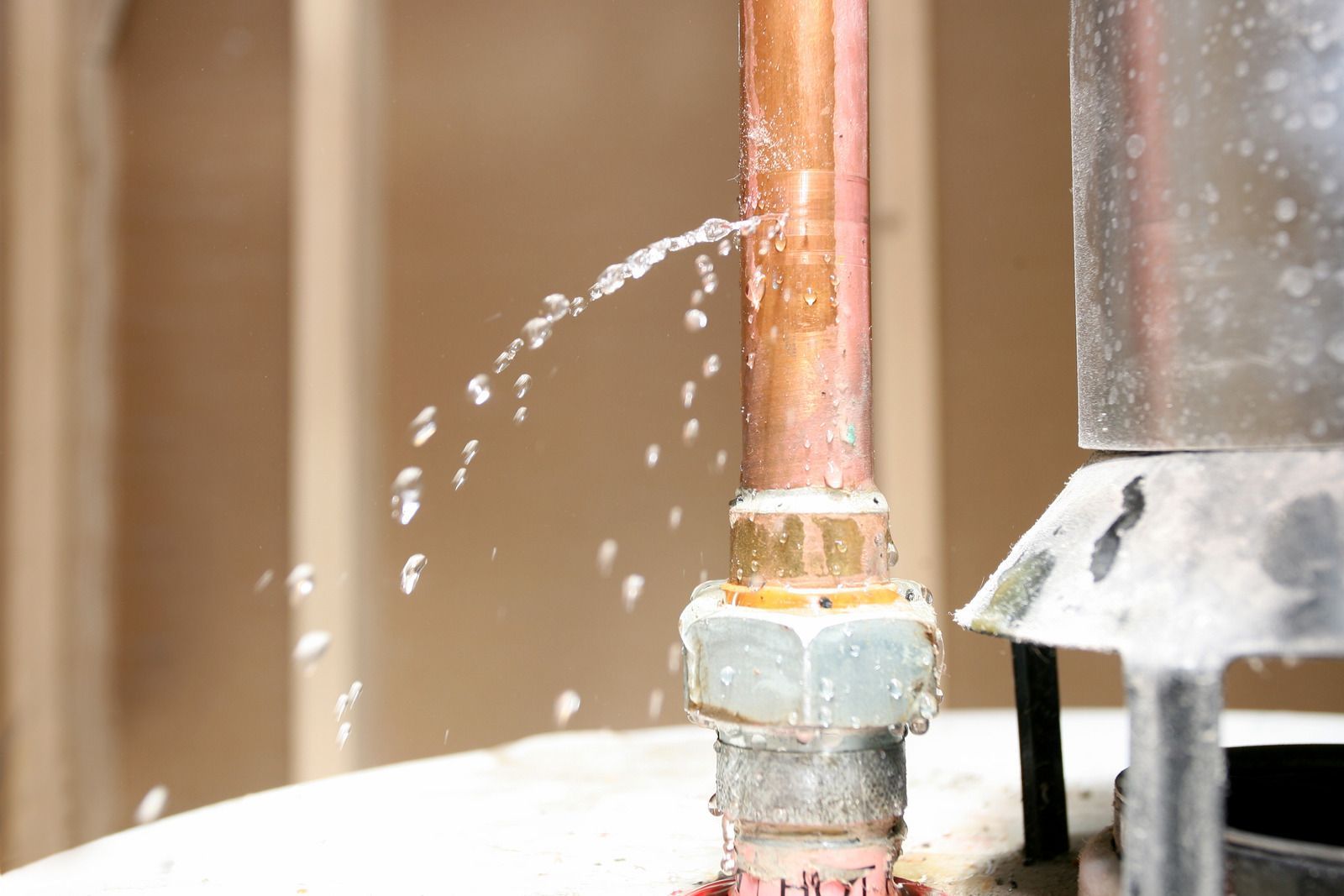
Leaking copper pipe spraying water onto a white surface indoors
June 15, 2026
Supply line leaks involve pressurized water escaping from pipes that deliver water to fixtures. They tend to cause faster and more widespread damage. Drain leaks occur when water escapes from drain pipes during use. Both require prompt repair, but supply leaks are typically the more urgent situation.
Black pipe running through a dirt trench with exposed roots and soil around it
May 29, 2026
Sewer line problems can create serious disruptions inside any home, affecting drainage, sanitation, plumbing performance, and overall property safety. When drains begin backing up repeatedly, foul odors appear around the yard,
April 16, 2026
Plumbing systems are the unsung heroes of every home and commercial building, quietly ensuring a steady flow of water, proper drainage, and sanitation. Despite their critical role, many property owners overlook the importance of routine maintenance, often waiting until a noticeable leak,
A black plastic pipe sits inside a freshly dug trench next to a concrete sidewalk, with dirt piles on either side.
March 14, 2026
Sewer lines are the unsung heroes of any property, silently ensuring that wastewater flows efficiently from homes and businesses to treatment facilities. Despite their crucial role, these systems often remain out of sight and out of mind until a significant problem arises.
Person installing plumbing under a kitchen sink with a garbage disposal unit.
February 14, 2026
A garbage disposal is more than a convenience in a modern kitchen—it’s a critical component that supports efficient waste management and overall home hygiene. Despite their durability, these appliances are not immune to wear and tear.
Plumbing repair: Black pipe exposed in a wall. Pink tape marks the pipe. Tools and debris on the floor below.
January 12, 2026
Older homes carry unique charm, history, and architectural character that many homeowners cherish. However, alongside their appeal, these properties often come with aging infrastructure, particularly plumbing systems that may no longer meet modern standards.
Worker in blue jeans cutting yellow pipe with a tool, outdoors on grass.
December 25, 2025
Water leaks are among the most common yet overlooked problems in both residential and commercial properties. While a dripping faucet or a slow leak might seem minor, the cumulative effects can lead to significant property damage, inflated utility bills, and even health risks due to mold and mildew growth.
Show More